ART FOR LIFE
- Nannette Brown
- Apr 9
- 7 min read
Reframing It

There are some seriously messed up connotations around art that keep way too many people from exploring it. Art can be intimidating. I get it. The artists and pieces we most often hear about are famous works—the kind that are housed in museums or break auction records.
Then you pile on the distancing beliefs: that art isn’t for everyone—that it’s exclusive. Or the intimidation factor—the feeling that you need to understand it to engage with it. Or that it’s too time consuming to learn, or the barrier to entry is too great.
If that’s not enough to stop us, we sometimes dismiss art entirely—relegating it to something performative or superficial—never considering we might genuinely like it, simply because we don’t understand it.
There’s even the closed-club connotation. We like to be included in things that feel social, and art is certainly perceived this way—so if we don’t perceive ourselves to be within the circle, then surely everyone else must like it for its status more than the work itself… right?
Then, there’s the greatest misconception: that art is a luxury, largely inaccessible because it’s too costly. The truth is, while there are priceless works, there are also incredible artists and craftspeople—many emerging or undiscovered—creating meaningful work at every level.
And who says you have to buy it? New and different ways of experiencing art, beyond traditional gallery and museum walls, are opening up everywhere—making it far more relatable and fun.

I’ve built a career out of exploring and procuring beautiful things for people, and I’m here to tell you—art is all around you, and there’s far more of it within reach than people think. It doesn’t have to be intimidating. And whether you realize it or not, you’re already living with it—and consuming it—every single day.
YOU’RE ALREADY A COLLECTOR
Art is Everywhere
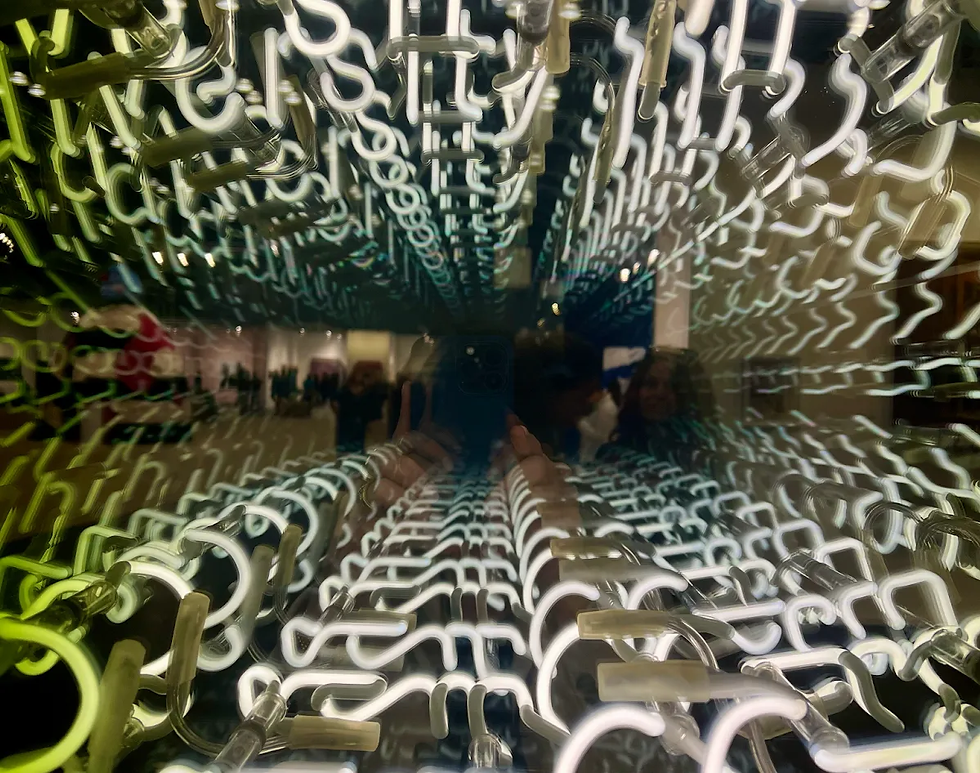
Art is all around you. It’s on the billboards you drive past, the posters on city streets and subways you walk by. The digital images and videos that cross your screen thousands of times a day. The brand images and packaging you open daily. Even the sounds you listen to and the experiences you engage with. It’s everywhere. It’s everything.
So whether you know it or not, you consume and collect millions of different cues, data points, and visual inputs everyday—through people, places, and things, including AI. All of it trains and sharpens our visual acumen. We engage with creative interpretations and visual language constantly.
Just like the art that hangs on a wall, or a piece of sculpture you walk around, every part of your visual world—dimensional, digital, even ethereal—carries messaging and meaning. Sometimes it leaves us wondering. Sometimes it makes us question. And sometimes it simply makes us feel.
Just. Like. Art.
WHY ART MATTERS
Blow Your Mind
When you engage with art, why do certain pieces, images, immersive spaces—even objects—stay with you the way they do?
Because art is powerful. It can leave a lasting impression. Plus it’s really good for you—all sorts of positive things happen to your brain and body when you experience art. It expands you and sometimes makes you feel things you can’t explain. Some might even say, it blows your mind.

I know I've certainly had some moving experiences.
Over the years, I’ve been surrounded by a lot of art. In many forms. The difference is, I’ve learned to recognize not only created art, but more common things I’ve grown to perceive and appreciate as art. I think this has helped me assimilate artistic expression from multiple forms into my life.
I see art in everything, everywhere. In the grates on a sidewalk. The shape of a skyscraper. The pigments and colors in nature, or even graffiti on a building I might pass. I see it as sight and sound, and experience too.
This awareness—that life, and everything within it, can be seen as art—informs how I see the world. But here’s a thought: it’s also informs how you see the world too. Collectively, we all process what’s in front of us. You just have to develop an awareness of what brings intrigue or beauty to you.
Understanding the importance of our visual and sensory sides—our aesthetic—both in art and in the everyday, sharpens that attention. This isn’t unique to me. It’s part of you, too.
And that has real impact.
Engaging with art strengthens focus and perception. It activates parts of the brain tied to memory, interpretation, and pattern recognition. It also affects how we feel.
Color, form, sound, scale—these elements can calm the nervous system or energize it. Studies have shown that interacting with art can reduce stress and improve overall well-being.

But beyond that, art expands how we think—and how we learn. It asks us to interpret, to question, to look more closely. Not everything has to be explained to have meaning, and learning to sit with that builds depth and perspective. It pushes us to think and to feel.
Over time, this refines taste. And taste isn’t superficial—it’s discernment. It’s personal coding. It’s how we decide what holds our attention, what moves us, and what defines us.
What we engage with consistently doesn’t just reflect how we think—it shapes the person we become.
REFRAMING ART
Perspective

Art no longer lives solely on walls or within institutions. It’s far more expansive today.
It’s immersive. It’s experiential. It’s something you step into, sit with, participate in. You can walk through it, listen to it, interact with it, even create alongside it.
Art shows up in installations, in pop-up exhibits, in studios, in classrooms, in intimate gatherings and larger public moments alike.
You can commission emerging artists. Attend a talk or a small dinner with one. Take part in drawing sessions or painting nights—sometimes over cocktails, sometimes in a cafe. It can be a formal lecture or casual discussion. It’s hands-on, it’s social, and it spans every level of engagement.
The format has expanded—and so has access.
You don’t need prior knowledge, access, or credentials to engage with art today. You don’t need to understand it in a traditional sense. You just have to be willing to enter it differently—to see it not as something fixed or formal, but as something fluid.
One of my favorite things to do is visit artists in-studio—often with clients, sometimes on my own. I never pass up the opportunity. That firsthand, up-close experience is incredibly informative and moving—to see the work in progress and to hear the artist’s perspective and the emotion behind it.

I also go on tours regularly—from artist studios and galleries to pottery trails, one of my summer rituals. Each July, I head to the Berkshires during open studio days to visit a dozen or so of my favorite potters. I never leave without feeling inspired—or without pieces that inform something I’m creating.

What I’ve come to realize is that art mirrors life as much as life mirrors art—and neither is ever stagnant. Both constantly evolve. We’re in a period of evolution, and across mediums—from the classics to modern immersive works, and from craft to design, pottery, furniture, and beyond—art is opening outward, not only in how it’s expressed, but in how it’s experienced by a far more engaged audience.

From institutions to artists to collectors, there’s a real desire to expand the audience—to make art more visible, more experienced, and certainly more accessible. While some events may still have limited access, across the board, it’s broader than it’s ever been.
Some experiences remain formal. Others more casual. The venues, the possibilities to engage with it, including the mediums, are mixed. The range is the point.
Because art isn’t confined to a single setting or standard anymore. It’s a living medium, and how you engage with it is entirely your own.
SPRING ART
City Shows And Experiences This Season

APRIL ART AND CULTURE GUIDE
April 9-12
April 10
Raphael: Sublime Poetry — The Met
Through June 28
Through April 25
Through April 26
MAY ART AND CULTURE GUIDE
May 14–17
May 15–19
May 14–17
Through May 31
Face Value – Celebrity Press Photography – The MoMA
Through June 21
OTHER ART & CULTURE
Art Cafe, art class, woodworking workshop, and more.
New immersive art NYC — Explore nature through scent, sound, and immersive art. Step into Instagram-ready spaces full of light and calm.
Art gallery, modern art, contemporary art, art collection, estate planning, museum, New York, appraisal, art appraisal.
Founded and designed by Isamu Noguchi (1904–1988), and committed to advancing the appreciation of his art and legacy.
500-acre outdoor museum located in New York’s Hudson Valley,
Multi-arts center located in Brooklyn.
Community-engaged New York City waterfront park dedicated to supporting artists in the production and presentation of public art.
Immersive installations that expand your boundaries of perception, indulge you in play and discovery, and engage your senses in unexpected ways.’
LIFE IMITATES ART
An Aesthetic Life

The more I pay attention to art, the more I realize it’s all around us. It isn’t separate from life. It is life. Life is art—it’s how we respond to it, immerse ourselves in it, and at times, become one with it.
Seeing life this way—and engaging with art itself—has taught me to look at everything more closely. To question what’s in front of me. To sit with things long enough to understand whether they resonate—or don’t. To ask why. And sometimes, to be okay with not knowing all the answers.
It’s made me more aware of nuance, contrast, tension, and restraint. And what I’ve come to recognize is that this awareness carries into everything. How I edit a space. How I make decisions. How I move through the world. Even how I see my own life as an art form.

We don’t need to be collectors to live with art. We don’t have to understand everything we’re looking at. But we do need to engage—to stay open, to stay curious, to allow ourselves to respond. To frame our lives through a more artistic lens—because that’s where growth, perspective, and experience expand.
Because life is constantly asking us to interpret it. And art is one of the most powerful ways to practice doing just that.
While art’s expression is often without words, it has a remarkable way of making sense of even life’s most complex ideas.
And the thing about art: the more you engage with it—the more fluent you become in your own perspective. Your own taste.
Ahh, taste. That recurring word that signals identity—yes, it becomes us. When you recognize it–and live by it–you’ve finally arrived. You’ve achieved an aesthetic life.
The secret? Confidence in your taste. That’s the real achievement.


Comments