THE LIFESTYLE CRUNCH
- Nannette Brown
- May 19
- 8 min read
When The Math Doesn’t Add Up

When did a salad become a $35 decision? When did an Uber start rivaling the cost of a cheap flight only a few years ago? And airfares—I shudder to think what these might climb to this summer.
There’s a relative value to everything we buy in life. These things define our lifestyles and all the choices that go along with them.
But everything feels entirely out of whack right now. And here’s the economic truth: the moment we’re experiencing has lost its relativity.
Costs feel scattered, irrational, even untethered. Increasingly, it feels like we’ve lost the ability to tie any reasonable value to anything. And it’s all starting to feel really frustrating as it becomes clear this might be more than a passing moment.
This tightening around the edges of our lifestyle has created a new kind of math we’re all playing. Not the personal or household-budget kind, but a more bewildering, unsettling version—the one where ordinary things suddenly carry extraordinary price tags. And where the prices keep escalating.
What used to feel like a reasonable treat you’d allow yourself now requires mental ping-pong. Gone are the automatic yeses.
And it’s not like we didn’t understand value before. Whether something was within our budget or beyond it, we generally understood it for what it was.

Here’s what’s actually happening beneath the sticker shock: your brain isn’t just tracking prices. It’s running a constant, real-time calculation and negotiation with itself—comparing the relative value of what things used to cost against what they cost today—and then calculating your emotional spend: what something is actually worth to you.
I know you’ve done these mental gymnastics too.
Here’s the other part of it: the numbers aren’t matching up. It’s not just that everything feels expensive. Costs feel irrational. Unwarranted. And that gap between cost and logic is what makes this moment feel different—and hard to reconcile.
This may be the most disorienting lifestyle adjustment some of us have ever experienced—or at least, the most sobering in a very long time. And here’s what’s novel about it: service inflation.
Ubers, restaurant fees, and delivery apps didn’t exist during other economic stretches. These are newer layers of spending, and they add to the burn. Inside every convenience, every casual indulgence, every I deserve this moment, there’s now a premium attached.
This is why I call it the Lifestyle Crunch. It’s been a nice run. But I worry that our lifestyles, as we know them, may be over for a while. And no one is immune. We’re all living it and seeing it.
But what if there was a silver lining? A really worthwhile lesson in all of this?
THE COST OF COMFORT
What You Forget

Until you lose it.
And there’s a name for it. It’s called hedonic adaptation. It’s our deeply human tendency to go numb—or no longer fully feel—the good things we acquire or accumulate until they’re gone, or until they cost enough to make us notice them again.
It’s the raise that once thrilled us that’s now just our salary. The apartment we had to have, or fought for, that becomes just where we live. The coffee, the lunch, the Ubers, all the invisible line items we begin treating as habits instead of preferences and privileges.
We stop feeling them. And tasting them.
It’s human nature. After we acquire what we want—or what we think we have to have—the positive emotions associated with it begin to diminish. And it happens pretty fast. The initial thrill fades, and then our aspirations move on to the next thing. Together, they form a kind of invisible eraser, wiping out appreciation before we even fully register it.
Until it’s gone.
And that’s what many of us are feeling now. This current crimp on our lifestyle is suddenly bringing that numbness—from big things to little ones—back into awareness. And through the simplest, everyday choices. Suddenly every decision has weight. And that weight, that pause before you say yes, is doing something actually sort of remarkable...
It’s making us see things again.
VALUE PROPOSITION

This is where it gets interesting. Because what this moment is really forcing us to see, and asking us to question, isn’t can I afford this? It’s something more searching: Do I actually need this? Do I really want this?
There’s a difference between the two, and most of us haven’t had to make that distinction in a while.
As costs continue to rise, it’s forcing a real reckoning with our relationship to value. And by values, I don’t mean the deeper ones—
These are the values we assign to what we buy, and what we already own. I’m talking about specific, material, everyday things. The things that show up—often without a lot of thought—in your cart, your calendar, your habits. Or the things you walk by every day that, at some previous point, mattered enough to acquire, but now barely register.
I’ve been thinking a lot about this. Because whatever this period we’re going through is, it’s made me see most everything I own or want to buy differently. It’s become a type of self-inventory, about what’s important to me, or what I really need, as well as an inventory and reevaluation of my things. And I’m gaining a whole new appreciation for what I already own that really matters to me.
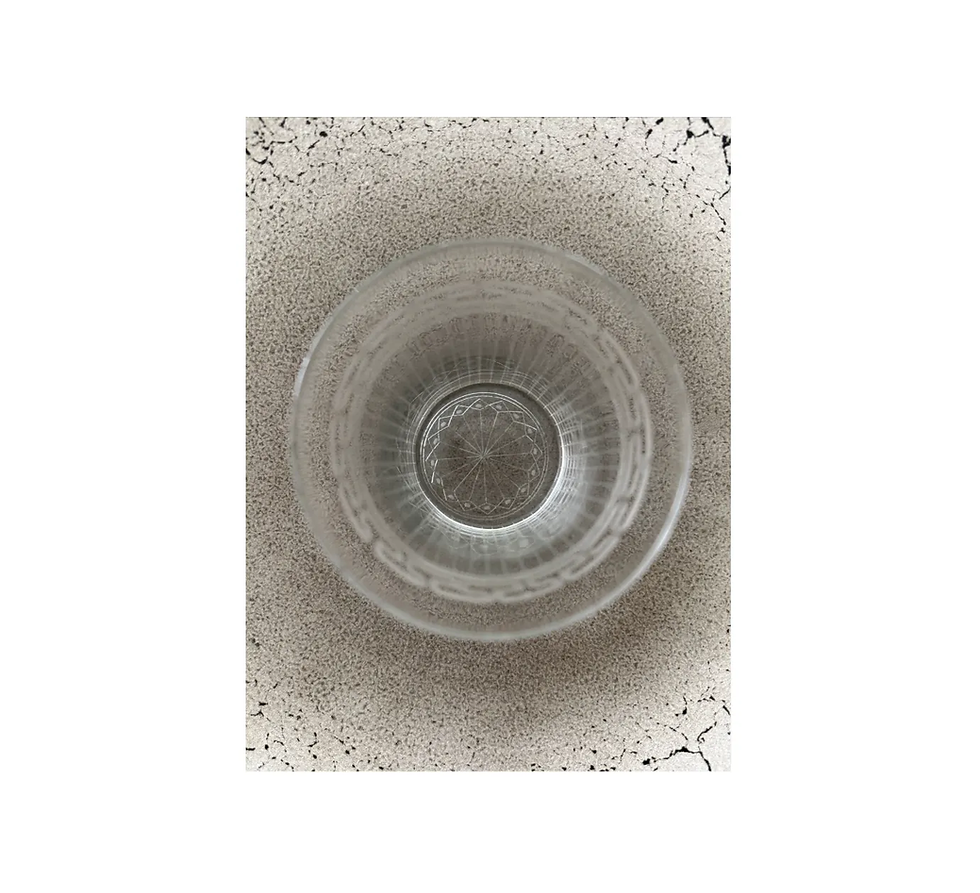
Here’s a perfect example: I have a set of 19th-century Victorian English drinking glasses that I acquired in London years ago—small, beautifully etched, perfectly shaped at the rim in a way I’ve never seen before. The top of the glass flares ever so slightly; almost molding to your lip. When you drink from them and look down, even the bottom of the glass is etched with a pattern.
I looked at them the other day and thought: Wow, these are really special. And they were so costly. I should enjoy them more.
So I moved one to my bedside next to my water carafe. Now, every morning and night, I can’t help but admire how gorgeous this drinking glass is. I noticed it, placed it in proximity to me, and by doing so, I’m experiencing it as if it’s new all over again. I think I appreciate them even more now.
Another example: we were doing a content piece last week about wardrobe, and I had occasion to go through some boxes tucked at the top of my closet. When I opened them, I discovered several pairs of designer sunglasses still in their original boxes and cases—one pair I’d never worn, and a few others I hadn’t touched in years.
It was so much fun. It felt like shopping within my own stuff—like, thank you very much to myself. This rediscovery made something old feel new again.

Which is all to say: what we’re experiencing isn’t all bad. I think we’re all collectively examining what things really mean to us.
For my part, I’m encouraging myself not to read this time—or the more conservative choices it may require—as deprivation, but instead as an opportunity to be more discerning about what I buy, and to see what I already own in a new light.
It’s a mind game, one that requires a fresh perspective, but can lead to some great discoveries.
ECONOMIC SUMMER
The Summit Within Yourself

We’ve all heard of economic summits. This summer, it might be worth holding one with yourself. A little lifestyle renegotiation. A reassessment of priorities, pleasures, and what actually feels worth the spend.
Here’s the reframe worth considering: when a transatlantic flight now rivals a monthly car payment—and that’s the low end, coach—and cross-country tickets are quietly climbing given fuel costs, the alternative doesn’t have to be staying home. It’s just going differently. And the destinations? Far from a consolation prize.
If you’re in New York, there’s Shakespeare in the park, or two hours north is Bethel Woods in the Catskills—the original Woodstock grounds. It was just voted the number one amphitheater in the country. Paul Simon is performing there this summer under an open sky.
Tanglewood in the Berkshires opens its 2026 season June 21st with James Taylor, Carrie Underwood, and the Boston Symphony. There are picnics on the lawn; it’s one of the great summer rituals in America. Both are a tank of gas away.
If you’re near Chicago, you have Lollapalooza in Grant Park, July 30 through August 2. Charli XCX, Lorde, The Smashing Pumpkins, and The XX will perform across four days, no camping required, city hotels available, and everything very much walkable.
On the West Coast, the Hollywood Bowl runs its summer season through October. You can catch Rod Stewart, The Counting Crows, Chance The Rapper, or the Los Angeles Philharmonic in one of the most beautiful outdoor theaters in the world.
In the Southwest? In Texas? Austin’s Red River District runs free live music for four days every summer. Free. In Austin. That’s not called roughing it. That’s called amazing.
Your summer doesn’t have to end in compromise, even if you are trying to make some more reasonable choices about how you spend it. It just requires some creativity—and the determination to make whatever you plan even better. And with it, you’ll gain a sharper sense of what you actually want from your time, your money, and your summer.
Who knows, the recalibration may just lead somewhere more interesting than you ever planned.
SMALL LUXURIES
That Feel Big

In 2001, Estée Lauder chairman Leonard Lauder noticed something counterintuitive in his sales data during the post-dot-com downturn: lipstick was selling. Growing, in fact.
He named it the Lipstick Effect—a phrase he coined based on the tendency to trade down on big purchases during times of economic uncertainty, while trading up on smaller, more affordable ones.
The psychology was fitting. We always need beauty, pleasure, and sensory reward in our lives. We are, after all, material creatures. We crave comfort, and sometimes comfort is connected to indulgence.
I know we’re meant to find pleasure in the small, non-material things. And it’s true, of course. But we’re still going to spend. So let’s be utterly realistic about the value judgments we’re making right now, because it would be insincere to pretend everyone is simply going to stop. We just need to spend more wisely.
Because the reality is, we don’t abandon the need to feel beauty and pleasure when we’re undergoing economic change. We just recalibrate how we access it.
Today, we call these small luxuries, and we’re hearing more and more about our attraction to them. They’re giving us that dopamine hit of indulgence, but on a smaller scale.
But unlike the Lipstick Effect, these modern indulgences aren’t just personal—they’re often aesthetic and identity-driven too.
It’s the really good olive oil. Not just any candle, but a designer candle, or hand-poured tapers—the real old-world luxury. The fresh flowers from the market that elevate your sense of civility at home. Better-quality sheets—maybe not the most expensive labels or the highest thread count, but basic, good quality organic cotton ones.
Or think analog. Old school. Like a magazine subscription. Honestly, one of my favorite small luxuries—a gift that arrives in the mail every month.

Even water can become an appreciable luxury. Ahh, what good branding can do. Walk into almost any designed or elevated home today and you’ll inevitably spot a few modern signifiers—all meant to telegraph taste.
One of the trendiest? Saratoga water. Guilty. I buy it because it’s the most effervescent sparkling water of them all—I swear I liked it before it became a thing.
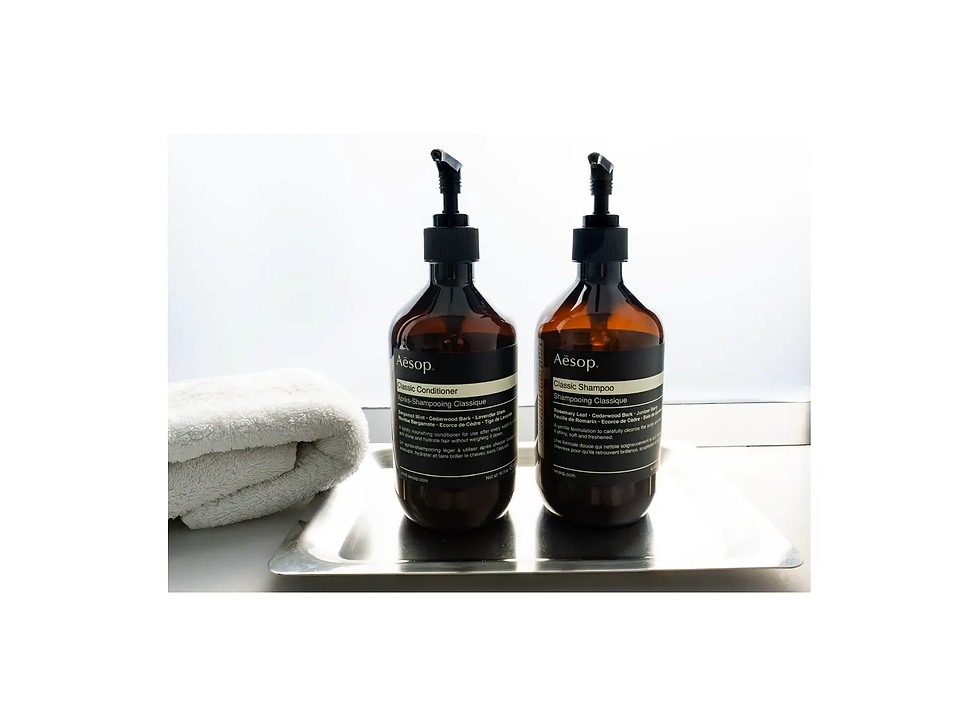
Then there’s AESOP hand soap. Or their shampoo and conditioner placed in many good guest bathrooms. You’ll find AESOP in nearly every boutique hotel too. It’s everywhere and honestly, almost a little too obvious for my taste.
Here are some other favorite small-luxury splurges that I really love:
Graza olive oil. The ubiquitous green squeeze bottles. So good—and convenient. I just wish they didn’t come in plastic, though I understand the lightweight, squeezable bottle is half the appeal.
On the higher end of olive oil, I also love Flamingo Estate limited edition olive oils. In fact, there’s not much not to like from Flamingo Estate. Like Erewhon, it has tremendous counter cachet when it comes to your home.

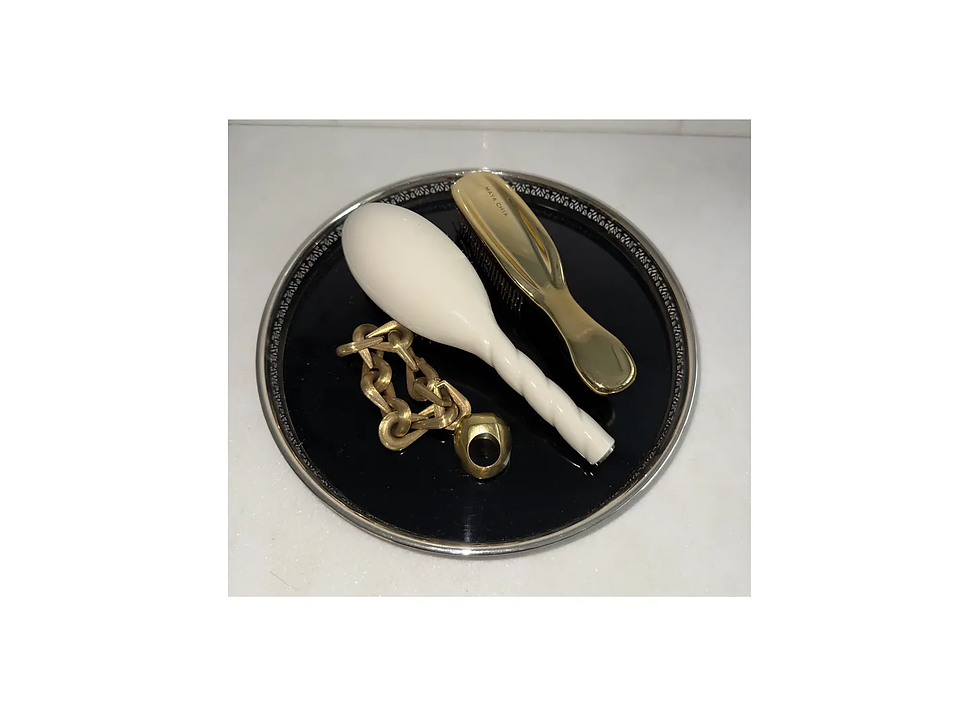
Another: a great hairbrush. I, for one, never thought I’d invest in a really terrific-quality hairbrush. At the margin, I thought hairbrushes were all pretty much the same. But, wow, was I wrong. These brushes genuinely feel different. And I think my hair is growing! I’m loving my Brosse and Maya Chia brushes—which are very different from one another by the way—and gorgeous too.
SILVER LININGS
Without The Compromise

So, there you have it. The lifestyle crunch is real. The prices are real. The reconciling and recalibration we’re all doing is real. And it appears it will be with us for a good amount of time.
While all of this doesn’t feel great, there’s some upside.
In this moment, on the other side of the negotiation you’re having with yourself right now, is a clearer picture of what you actually value.
The math may not always add up. But you might. N B x



Comments