THE ARCHITECTURE OF TRADITION
- Nannette Brown
- Dec 4, 2025
- 6 min read
Long before the holidays became the frenetic season of shopping, parties, and food we know today, human beings marked this time of year with rituals of light, togetherness, and meaning.

Across early cultures—from the Norse and Celts to communities throughout the Mediterranean—winter rituals centered on the same idea: bringing light into the darkest time of year. Evergreen branches symbolized life. The Yule log burned to welcome the return of the sun. Candles were lit as small beacons of hope.
As religions took shape across the world, these early customs became layered with new significance. Christianity wove existing solstice symbols—greenery, candlelight, communal meals—into the celebration of Christ’s birth.
Judaism brought forward its own luminous tradition: Hanukkah, an eight-night ritual honoring resilience and faith through the lighting of candles.
Even gift-giving and holiday foods echoed rituals from ancient and medieval cultures: Romans exchanged simple offerings during Saturnalia; St. Nicholas became known for quiet generosity to the poor; Jewish families offered gelt to encourage learning.
Seasonal dishes across the world developed meaning too—Christmas pudding and mince pies began showing up on tables in England and early America; latkes fried in oil became a staple during Hanukkah; hand-rolled tamales became a holiday tradition among generations of families across Mexico and Latin America.
Whatever the culture, feasts became enduring symbols of gathering. And the ritual of gathering became the emotional architecture of connection.

TRADITION A LA N B
Rare is a Tradition I Don’t Like
I love tradition. Tradition gives shape to life. As far back as childhood, traditions and the rituals around them always mattered to me. Together, they signaled love, comfort, and security.
The holidays were especially magical. Even then, I sensed that it was a special time of year, that the season was different, and that we all seemed to rise a little higher to meet it.
We gathered, dressed up, made special foods, and created an atmosphere that felt elevated from every other day. Even the act of coming together became its own ritual; it was our collective way of saying this matters.
I’ve always been fascinated by how traditions among us are so varied, how they can be deeply personal yet instantly recognizable, universal in feeling yet specific in detail. They bind us in ways both familiar and wholly our own.
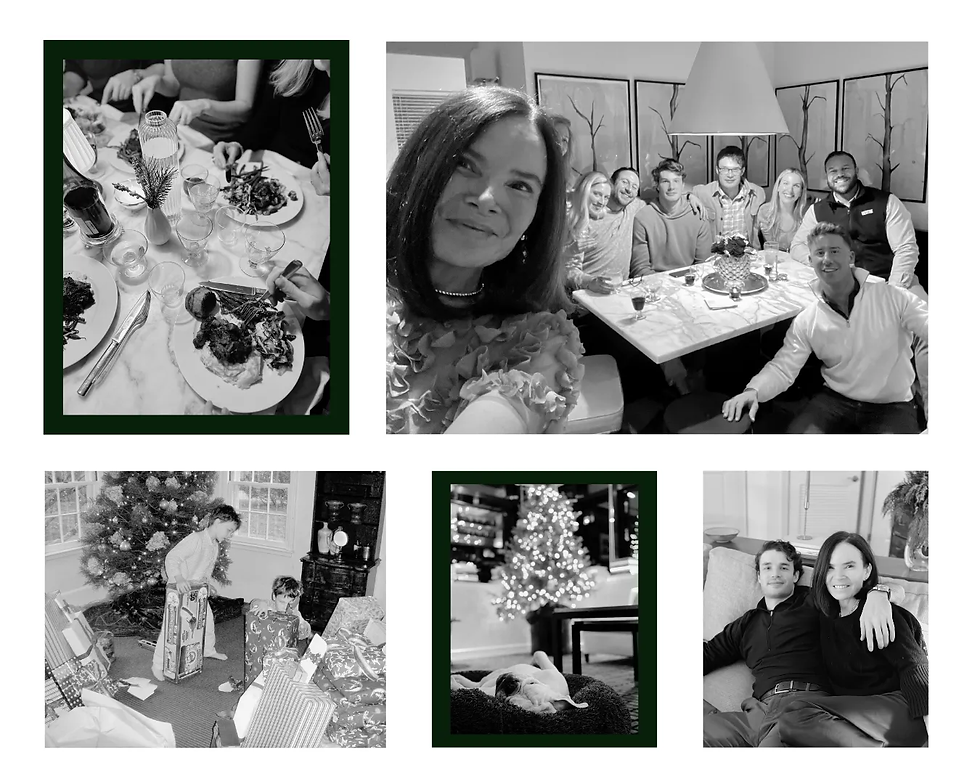
And, of course, this is the season when it’s all on display — the beauty, the nostalgia, the joy, and yes, even the pressure. Family dynamics, expectations, logistics, grief, change… the holidays ask a lot of us.
But even inside the complicated edges, tradition offers stability and meaning. It remains one of the most elegant forms of emotional architecture we have.
I’ve thought a lot about tradition over the years — what it means, the significance it carries, how this big, abstract idea of passing things down, and the cultural and familial value of continuity, shapes generations of families.
I’ve thought equally about traditions — the rituals around this grand idea, especially my own: the ones I grew up with, the ones I introduced to my children, and the ones acquired along the way.
Everything from the holiday candle I discovered in London that I burn seasonally, to the fresh tree I put up each year, to the snack left for Santa on Christmas Eve — even my tradition around stockings (spoiler: everyone gets one) — I think of it all.
I also wonder about future traditions — whether my sense of tradition, or the rituals I celebrate, will change and evolve as my life expands. I imagine they will. I think about tradition in the context of my children — what these rituals will mean to them when they have families of their own one day.

I quietly hope that the traditions they’ve known their whole lives will mean enough that they weave them into expanded traditions with their wives — and that in some small way, a little bit of me travels with them.
I’ve considered the concept of tradition — and traditions, specifically — for so long that I’ve come to think of them in three ways: the traditions we inherit, the ones we create, and the ones we blend.
I think of them not as a rigid framework, but as a reminder that traditions are not fixed pieces of the past. They are alive. They take new shape as we evolve, expanding as our lives and families do.

MAKING IT MINE
My own traditions
True to my word, I love all forms of tradition— and mine are a combination of all.
The Inherited:
Growing up, Christmas was centered around family, food, gifts, stockings, and plenty of intrigue about Santa Claus. While my grandparents were religious, my mother and father weren’t, so aside from the occasional midnight service, the season was about the anticipation and preparation leading to Christmas Day. But in our family, Christmas Eve was the true event — more so than Christmas morning.
This is an inherited tradition I still honor. Christmas Eve dinner was, and still is, the larger, more formal, celebratory meal. The menu has remained anchored in the classics: a large ham alongside a roasted turkey or beef tenderloin, with a rotating cast of sides — creamy potatoes, green beans or Brussels sprouts, and dressing (not stuffing) if turkey was served.

Desserts were a show of their own: my grandmother’s ten-layer apple stack cake, her Christmas fruit cookies, and a myriad of pies and sweets that appeared every year — my mother’s chocolate pie that disappeared almost as soon as it was cut, and my personal favorite, a very Southern butter-and-sugar pie made with cornmeal, called chess pie. These were always present.


The Created:
Through trial and error in cooking and finding my own rhythm — and as my interest in food deepened — so did my menus. I became more adventurous, more curious to introduce different foods to the celebration. I devoured cookbooks, magazines, and friends’ recipes, building menus that matched my life at that moment.
When I moved to England, everything shifted. The season looked different, felt different, and new rituals emerged naturally. The holiday was more formal, the foods somewhat different, and I wanted to introduce these into my American traditions. Even the manner of setting the table began taking on a new shape. These new created traditions became my way of grounding myself in a new chapter of life.


The Blended:
Once I had children, my rituals expanded again — not just with more food and the addition of toys and Santa’s arrival on Christmas morning, but with traditional lessons I felt important to impart to the boys.

There were also blended traditions inherited from the other side of the family. Christmas Eve grew to include neighbors for cocktails and hors d’oeuvres, followed by family dinner, and the annual frenzy of getting the kids to bed, wrapping last-minute gifts, and stuffing stockings well into the night.
Christmas morning came early and involved lots of coffee. If at my mother in law’s, warm loaves of Irish soda bread from Susan, a close family friend, would arrive wrapped in foil and cloth on the back doorstep. We’d immediately cut into the loaves and slather slices with fresh butter from the dairy farmer that Elisabeth frequented and loved.
These loaves became tradition too—they arrived each Christmas morning and they, along with a breakfast casserole or easy eggs — often with leftovers from the previous night — were the standard on casual Christmas mornings as the kids tore into the gifts left by Santa.


Over the years, these gatherings became stitched into my holiday fabric, blending inherited rituals with created ones, all shaped by an expanding life, children, friends, and geography. And like so many blended traditions, they evolved organically — growing into something beautiful I could never have anticipated, yet now feel essential.
This, in many ways, is the heart of tradition: a willingness to evolve and to believe in the beauty of repetition — in the compounding of small rituals that become something larger than themselves.
DIFFERENT BUT SAME
Shaping Traditions
What I find endlessly compelling is that while our rituals may differ — and the cultures, symbolism, and foods may shift from home to home — the architecture underneath them is remarkably consistent.
Ritual creates order. Connection. Anticipation. Identity. It gives shape and texture to time and memory. It turns a gathering into an occasion and a moment into a marker.
Tradition is how we honor what came before us while leaving space for what comes next.
Even the rituals that evolve — or fade, or pause for a season — hold meaning. They remind us that life is fluid, that families change shape, that the way we celebrate today may look different tomorrow. And that’s part of the beauty.

Tradition is, in its own way, design — the architecture of emotion, connection, and continuity.
HAPPY TRADITION-MAKING
As we enter this holiday season, I hope you find comfort in the rituals you love, freedom in the ones you’re ready to evolve, and inspiration in the ones waiting to be created. Tradition is not about perfection — it’s about presence. It’s about gathering in ways that make life feel a little fuller, a little richer, a little more connected.
Whatever you celebrate, however you gather, may your season be filled with warmth and meaning—the kind you inherit, the kind you create, and the kind you blend along the way.


Comments