DO YOU HAVE BAD MANNERS?
- Nannette Brown
- Jul 2
- 10 min read
No One Thinks They do. That's the Problem.

THE SOCIAL EQUATION
At some point, everyone you know — including someone you actually like — has done something that felt rude or inconsiderate. Whether intentional or not, you were left feeling offended, dismissed, or just plain annoyed.
But here’s the real puzzle: how does someone with genuinely poor manners go through life completely convinced they have great ones?
I try to balance my assessment of why so many people seem oblivious to their own behavior. And I struggle with it. Is it us? Are we just overly sensitive? Does familiarity breed contempt—or simply make it easier to take one another for granted? Or am I on to something? Did good manners get swept out to sea, or was it a slow drift, barely noticed by generations who never knew a different time or a different set of expectations around behavior?
I’ll tell you this much: no one seems to own their rudeness these days. And yet the very nature of living in a civilized society is that we’re, well, civil. The world today, though, feels anything but. We’ve grown way too complacent — about everything from replying to RSVPs, emails, and phone calls (scratch that — nobody calls anymore, they text) to the tone of political discourse and caustic online trolling. And then there’s what feels comparatively minor but isn’t: wearing scrappy pajamas, bed head, and flip flops on planes. Have some respect, people!

I’m pretty chill about a lot of things. But I really, and I mean really, dislike rude behavior and— meanness. Both feel pervasive. Technology is amazing — but if you’ve lived long enough to know the world before you carried it in the palm of your hand, you know how it radically changed how we communicate. Every form of it: the way we talk to one another, read our news, conduct our social lives, and shop for dates. And don’t forget communication is non-verbal and behavioral too, and both are core tenets of good manners. At least, modern ones.
I’m no Miss Manners. But I think we’re getting ready to see a significant shift in expectations around behavior.
Is this wishful thinking? Maybe. But I’m inclined to be an optimist. And I’m in a position to know a thing or two about etiquette — I used to own one of America’s oldest social heritage brands, Mrs. John L. Strong. We sold the world’s most expensive hand-engraved papers and spent decades guiding every social occasion imaginable, which meant navigating every etiquette dilemma too. InStyle magazine even once called me “The Etiquette Authority.“

Here’s what that experience taught me: the rules were never really the point.
Today calls for a new understanding of social engagement, and we’re already watching it emerge. Social clubs, interest-specific events, and the rise of third and fourth spaces are everywhere. So dust off the old notions of etiquette — because we were breaking them anyway.
I’m here to help you get clear on what’s old, what’s new, and why it’s essential to be not only socially aware, but socially intelligent.
NEW RULES
Ditch The Old Playbook

Etiquette is a rulebook. A list of prescribed behaviors that signals you know the social code of a particular group, era, or occasion. You either follow the rules or you don’t. It was designed for a specific cultural moment and has been losing relevance ever since.
Manners are something else entirely. They’re a value system — considerate traits that become natural behaviors because they reflect your principles, your standards, and your beliefs. About others, and about yourself.

This question reframes everything. Because when you ask it honestly — about being late, about the phone on the table, about whether you followed up — you stop following a checklist and start paying attention. And paying attention is where good manners actually begin.
For as long as I was in the social stationery business, and now in media, one thing has always been clear to me: sincerity, consideration, and kindness trump any prescribed rules of conduct. I apply these principles to everything — social situations and business alike — and they rarely fail me.
The equation is simple: how you behave determines how people feel. How people feel determines how much they like and trust you. And how much they like and trust you determines almost everything else — your career, your relationships, your reputation.
That’s not soft. That’s the whole game.
THE SCIENCE OF MANNERS
True Stuff

Good manners aren’t just nice. They’re neurologically effective, and the research is worth knowing.
The Halo Effect — documented extensively in social psychology — shows that when someone behaves with genuine consideration and warmth, observers automatically rate them as more competent, more intelligent, and more attractive. Nothing else changed. The behavior did. One quality bleeds into the perception of everything else.
Then there’s the science of mirror neurons, which explains why warmth is contagious. When you’re genuinely present with someone and you’re fully attentive, responsive, and engaged, their brain begins to mirror aspects of that experience. They feel seen. They feel safe. They feel good about being in your company.
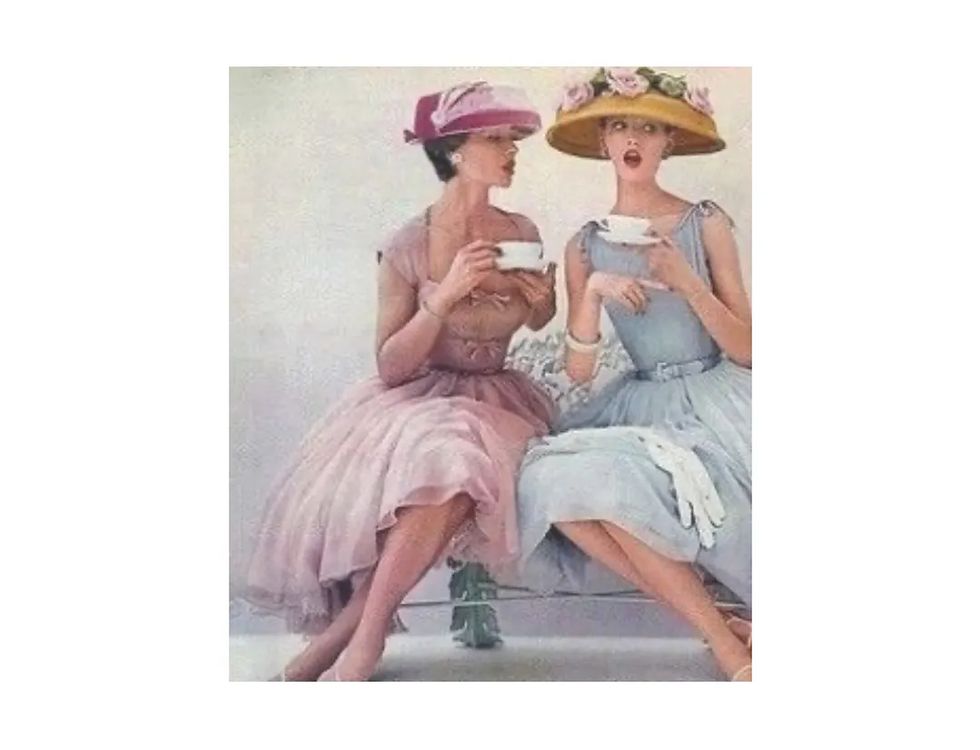
Reciprocity, too, is worth a closer look too. Robert Cialdini’s research shows that consideration consistently triggers consideration back. It creates a loop. What you put out comes back to you. This isn’t philosophy — it’s documented social science.
There’s even a belonging signal. At a neurological level, considerate behavior communicates something very specific: you’re safe here. And humans are hardwired to respond to this signal. It’s why the person who makes introductions, who remembers your name, who actually listens draws people in with seemingly little effort. We intuitively trust them.
The cost of getting this wrong is equally measurable. This one stopped me cold — I checked it twice. Researcher Christine Porath at Georgetown has spent years studying workplace incivility, and her findings are stark: rudeness causes people to disengage, underperform, lose creativity, and avoid collaboration. At a massive cost to companies.
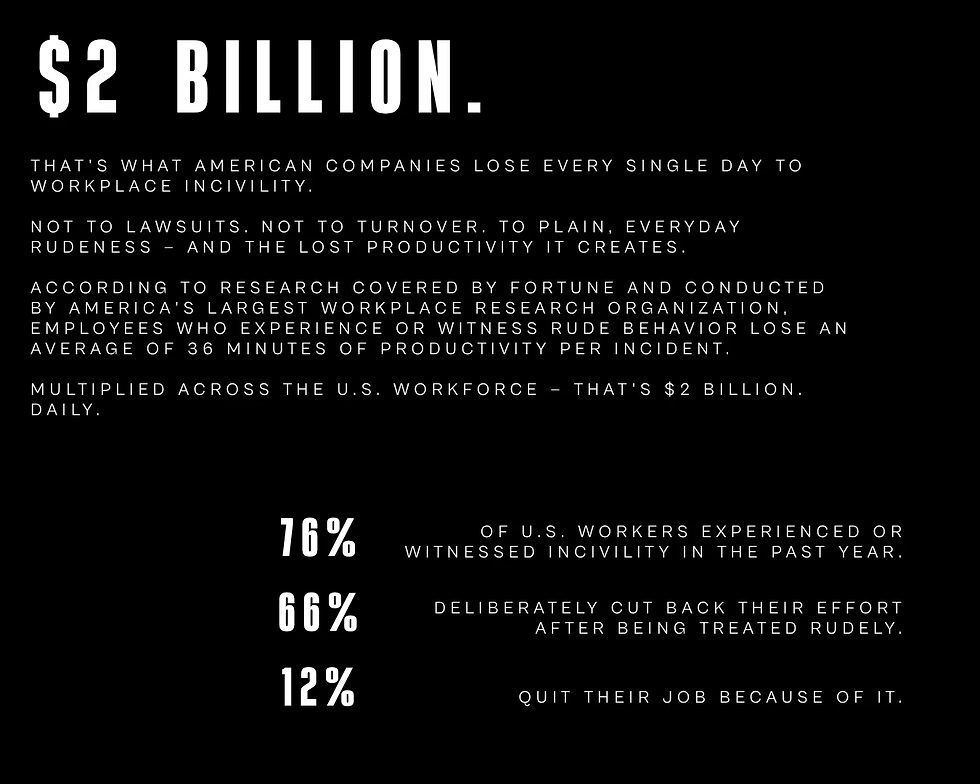
Bad manners aren’t just unpleasant. They’re expensive.
OBLIVIOUS
The gap between how we think we come across and how we actually come across is one of the most uncomfortable truths in behavioral psychology.
Most rude behavior isn’t malicious. It’s unconscious. People cut others off in conversation because they’re usually excited, not because they’re dismissive. They don’t follow up because they’re overwhelmed, not because they don’t care. They check their phone at dinner out of habit, not indifference. The intention is rarely the problem. The impact is.
It’s worth noting that several generations have come of age with no experience or reference to pre-technology behavioral conventions. This isn’t a criticism — it’s context. There’s no nostalgia for something you never knew. The behavioral baseline shifted and a new normal became the norm.
What makes this interesting is the paradox. The generations with the least exposure to traditional social conventions are simultaneously among the most vocal about wanting authentic human connection, real community, and meaningful relationships. They feel the absence of something very human. They just can’t quite name it.
What they were never taught is this: presence, acknowledgment. and follow-through. These aren’t social niceties. They’re the actual mechanics of connection. You cannot want the belonging and skip the behavior that creates it.
Scott Galloway named part of it in his 2025 book Notes on Being a Man. His argument which applies well beyond gender, is that we’ve allowed decency to become optional when it should be foundational. His point: kindness is “the most underleveraged skill” in both professional and personal life.
He’s right. And it applies to all of us.
THE HIJACKER
Conversation Thief

Ahh, one of the bigger offenders. We've all been on the receiving end of one.
The conversational hijacker. Someone who repeatedly — and usually unconsciously — redirects a conversation away from the other person and back toward themselves before the original speaker has finished. The key word is unconsciously. It is also one of the most irritating offenses — because we’ve all met this person. And most of us have even found ourselves vying for misdirected inclusion.
Here’s some grace: most conversational hijackers aren’t trying to dominate. They’re simply enthusiastic, eager to relate, or anxious to contribute. They don’t mean to display poor manners or be inconsiderate. But intention and impact are not the same thing.
You: “I just got back from Italy...”Hijacker: “Oh! I love Italy. When I was in Tuscany...”
Without realizing it, the conversation has moved from your experience to theirs—and often stays there.
It shows up in other ways too: one-upping, finishing your sentences, stealing your punchline, answering for you in front of others, name-dropping mid-conversation to redirect attention. Each one leaves the other person feeling unheard, interrupted, and subtly dismissed.
Ironically, conversational hijackers often believe they’re building rapport by relating with their own stories. In reality, the other person experiences it as competition. Place a group of insecure people at a dinner table and watch. It’s really something.
What’s important to know — and makes this easier to navigate — is that most of them aren’t doing it from a place of selfishness. They’re doing it from a place of need. Research shows the brain responds to self-disclosure much the way it responds to food or money: it feels good to be heard, and for someone who doesn’t feel heard enough, the pull is stronger. This doesn’t make it less exhausting to be on the receiving end. But it does make it more human — and less personal.
Conversation isn’t a competition for airtime. It’s an opportunity to make someone else feel heard.
THE RETURN TO CIVILITY?
Fifty Three Percent

Something is shifting.
More than half of Americans describe society as uncivil, according to a 2025 survey—more than twice as many as those who believe it's civil. That's one side of the story.
The other side: recent research documents a measurable surge in the desire for in-person connection, community, and genuine human warmth. These two things aren’t a coincidence. They’re cause and effect.
When people are consistently treated with rudeness — the signal that they don’t matter, sense unfairness, and feel slighted or unheard — something accumulates. They begin to long for the opposite. I think this speaks to something even more fundamental: our inherent desire to be kind. At least I’d like to think so.
The irony? That rudeness itself is driving the longing. But it makes sense. People are tired of being offended. Tired of the low standard of behavior. Tired of the feeling that consideration isn’t a given but a game of whack-a-mole.
There’s also a simple law of scarcity at work. When something becomes rare, it becomes valuable. A handwritten note today is so uncommon it’s remarkable. Eye contact. A follow-up. Arriving on time. These things now register as exceptional behavior, even impressive. The bar wasn’t raised. It’s just that so many people do the minimum today.

I’ve been watching this long enough to make a prediction: we’re going to come back to civility. Not to formality or rigidity. But to the baseline understanding that how you treat people is a direct reflection of what you believe about your own worth. And most people, given the choice, want to believe they’re worth something.
More simply: if we want to be liked, we have to give people a reason to like us.
I also believe most of us want peace and pleasantness in our days. And that starts with us. Life’s too short for anything less.
MODERN MANNERS

Modern manners aren’t about a set of binary rules. They’re a value system — considerate traits that become natural behaviors because they reflect your principles, your standards, and your beliefs. About others. And about yourself.
This is what good manners actually look like today.
Presence. Put the phone away — face down, screen off — when someone is talking to you. Full attention is now the rarest and most powerful gift you can give another person. It says: you matter more than whatever is on that screen.
Acknowledgment. See people. Say hello to the person at the front desk, the barista, the colleague in the hall. Make eye contact. Speak their names when you know them. The act of being noticed changes how someone feels about their day — and you.
Timeliness. Being late is a statement about whose time matters. Being on time says the other person’s schedule is equal in value to yours. This applies to meetings, texts, RSVPs, and deadlines equally.
Consideration. Think one beat ahead: how will this land for the other person? Before you send, say, or do — pause. This single habit separates the people who are genuinely well-mannered from those who simply follow rules.
Gratitude. Don’t assume people know you’re grateful. Say it. And here’s where old becomes new again: write the note. An actual handwritten note in 2026 is so rare it becomes remarkable. If that’s not possible, a thoughtful text or email counts.
Follow-through. Do what you said you would do. Reply when you said you’d reply. Show up when you said you’d show up. In a world of chronic over-promising and under-delivering, reliability is a form of respect — and a genuine competitive advantage.
Digital consideration. New territory, real rules. Don’t text during meals, meetings, or meaningful conversations. Respond to emails and messages within a reasonable window — leaving people waiting is its own statement. Don’t put someone on speakerphone in public without asking. Think about the experience on your end.
Grace. How you behave when things don’t go your way reveals your actual character. The delayed flight, the wrong order, the frustrating colleague — your response in those moments is what people remember about you.
Inclusivity. Bring people into the room. Introduce people who don’t know each other. Don’t leave those in conversational proximity stranded. Ask questions and listen. Don’t interrupt. Don’t check your phone mid-conversation. Make others feel welcome.
Respect. For privacy and boundaries. Don’t share what someone told you in confidence. Don’t tag people in photos without asking. Don’t publicly call someone out when a private conversation would do. Digital life has created entirely new categories of boundary violation — and entirely new opportunities to demonstrate that you know the difference.
DESIGN YOUR MANNERS
And Mind Them Too

Here’s where your personal architecture fits in, and it may be the most interesting, most often overlooked part of this conversation. Good manners are about how you treat other people, yes. But they’re also about the standards you hold for yourself.
How you dress — for the office, the flight, the dinner, or even the errand — says something about what you believe you’re worth. So does the discipline you bring to your health, your habits, and whether you walk into a room prepared.
These aren’t small things. They’re signals you send to yourself about your own worth. And over time, those signals become something. A reputation, yes — the framework through which others see you. But more than that. They become a self-concept.
Bad manners, in this same light, don’t just affect the people around you. They erode your own architecture. The person who consistently fails to follow through, who shows up unprepared, who checks out of conversations, isn’t only losing ground with others. They’re losing a valuable part of themselves, and that identity will show up eventually.
How you behave is how you present your inner architecture to the world.
The good news, and there is very good news here, is that manners—and standards—are entirely learnable. They’re not a personality trait. They’re a practice. You decide, one behavior at a time, what message you want to send. And that decision, repeated consistently, becomes who you are.
I’M NO MISS MANNERS

I’m not here to tell you how to be perfect. And no list or set of rules is going to make you better mannered.
Only you can do that.
You just have to read the room. See the person in front of you. Understand the message your behavior sends before you say a word.
The return to better manners isn’t about bringing back a lost world.
It’s about something much more modern: the collective understanding that in this fast-paced world of technology, AI, and constant change, how we treat one another is a choice. And the choices we’ve been making over recent years haven’t been so good.
We can do better. And I think we’re about to.


Comments